
It took a long time to get to the Ventures in my project to rip and sell a large vinyl collection. I left them for the end because, frankly, I wasn’t sure I could face listening to the hours of music my Ventures 24 albums contained. These guys released some two dozen albums in the first half of the 1960s alone, and they must have been desperate for material. How else to explain why a song like Jimmy Crack Corn – a standby from everyone’s second or third music lesson — would wind up on Dance With The Ventures (also
Continue readingCategory: Culture

Ernie Bushmiller’s Comic Perfection: How to Read Nancy
I admit it. I love Nancy, and not ironically, at least not any longer. I grew up reading Nancy and Sluggo every day in the Chicago Sun-Times, which says something about my parent’s household (i.e., the Sun-Times, not the Republican Tribune). But it was in college that I became truly devoted to Nancy and her creator, Ernie Bushmiller.
Continue reading
Lucy Sparrow: All Felt All The Time
Lucy Sparrow makes deeply felt art, literally. She creates facsimiles of real objects in felt, and does so on a massive scale. The current example, a fully stocked all-felt convenience store, opened June 5 in New York and will continue for four weeks. The individual items — available for sale, of course — are each a treat in themselves. When they fill the shelves and fixtures of a shop, the colors and cultural resonances are wonderful. Sparrow, who hails from Bath, England, clearly wants to delight her audience with good feelings, but she also has some social commentary in mind.
Continue readingReview: California Crazy and Beyond: Roadside Vernacular Architecture
California Crazy and Beyond: Roadside Vernacular Architecture by Jim Heimann My rating: 5 of 5 stars 1980’s California Crazy was one of the early gospels for roadside art enthusiasts, documenting dozens of the state’s wonderful theme buildings of the early 20th century, from giant donuts to miniature sphinxes. Author Jim Heimann updated the book in 2001 with California Crazy and Beyond. The old version was presented as a logbook, and in some cases the images are larger. The new volume is redesigned as a more conventional picture book, with lots of additional pictures and a great deal more writing. Both
Continue reading
Living the Skeptical Life
The whole problem with the world is that fools and fanatics are always so certain of themselves, and wiser people so full of doubts. — Bertrand Russell That uncertainty is an unyielding fact of existence is hardly controversial. It’s in the wisdom of the ages, after all — we’re here today, gone the next, who knows what tomorrow might bring – and it’s enshrined in a renowned scientific principle via Prof. Heisenberg.
Continue reading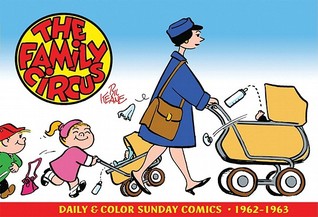
Review: The Family Circus: Daily and Sunday Comics, 1962-63
The Family Circus: Daily and Sunday Comics, 1962-63 by Bil Keane My rating: 5 of 5 stars I liked Peanuts as a kid but I loved Family Circus. Where Charles Schulz used his kids to make universal points, Bil Keane tried to be about real kids and real parents. It was a chronicle of post-war suburban life, and I could relate. It also was probably the greatest source of insight I had into the parental point of view (well, along with Dave Berg’s The Lighter Side comics in Mad Magazine, with had some similarities to Circus in style and point
Continue readingReview: Clothes, Clothes, Clothes. Music, Music, Music. Boys, Boys, Boys.
Clothes, Clothes, Clothes. Music, Music, Music. Boys, Boys, Boys. by Viv Albertine My rating: 5 of 5 stars I came of age around the same time as Viv Albertine and I was drawn to punk, so this memoir was bound to resonate for me. Much as I appreciated punk’s exasperation with the state of both society and popular music, though, I was far too inhibited, and more to the point way too square, to be part of the scene. Albertine was very much in the thick of it, however — friend and bandmate of Sid Vicious pre-Sex Pistols, close to
Continue readingReview: John Baeder’s Road Well Taken
“John Baeder’s Road Well Taken,” by Jay Williams, Vendome Press, 272 pages, 300 color and b&w illustrations, 2015. 978-0865653191. Hard cover $45 John Baeder is legendary among roadside architecture enthusiasts for Diners,” his book of photorealistic diner paintings that turned out to be one of the most culturally influential publications of the 1970s. Baeder, the subject of a new biography by art historian and curator Jay Williams, appreciated 20th century roadsides and the buildings that populated them before they became old, when they were just ugly rather than a source of popular nostalgia.Widespread fascination with highways like Route 66 and
Continue readingReview: Letters of Note: An Eclectic Collection of Correspondence Deserving of a Wider Audience
Letters of Note: An Eclectic Collection of Correspondence Deserving of a Wider Audience by Shaun Usher My rating: 5 of 5 stars Interesting letters, most by notable people, through the centuries, well presented. What’s not to like?
Continue readingShort Review: Harlem: The Unmaking of a Ghetto
Camilo Jose Vergara brings a fine photographic eye, a sociologist’s curiosity and expertise, and tremendous commitment to his explorations of cities, their decay and their resilience. This study of Harlem is most enlightening.
Continue reading