
Incense, lanterns and conical hats
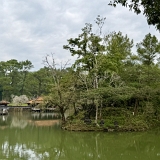
Tu Duc's temple complex and tomb, 19th century, Hue. The king's future mausoleum served in the meantime as a secondary palace
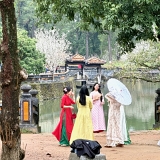
Photo session at Tu Duc's temple complex and tomb, Hue. Young women could be found dressed up and posing at nearly every scenic vista in Vietnam
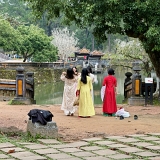
Photo session at Tu Duc's temple complex and tomb, Hue
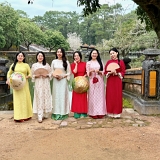
Photo session at Tu Duc's temple complex and tomb, Hue.
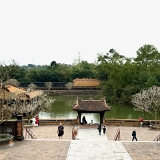
Tu Duc's temple complex and tomb, Hue
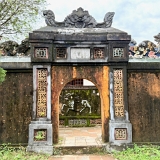
Tu Duc's temple complex and tomb, Hue
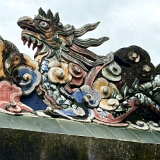
Tu Duc's temple complex and tomb, Hue
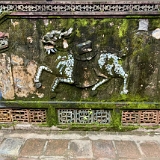
Tu Duc's temple complex and tomb, Hue
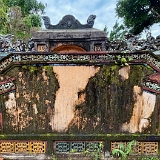
Tu Duc's temple complex and tomb, Hue
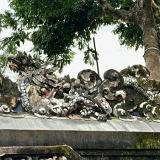
Tu Duc's temple complex and tomb, Hue
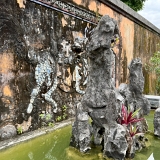
Tu Duc's temple complex and tomb, Hue
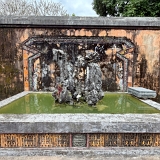
Tu Duc's temple complex and tomb, Hue
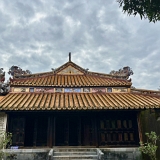
Tu Duc's temple complex and tomb, Hue
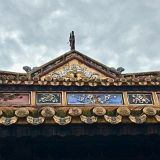
Tu Duc's temple complex and tomb, Hue
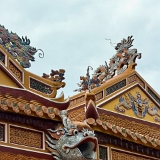
Tu Duc's temple complex and tomb, Hue
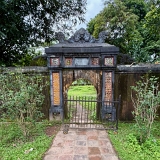
Tu Duc's temple complex and tomb, Hue
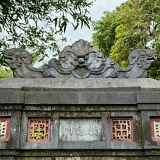
Tu Duc's temple complex and tomb, Hue
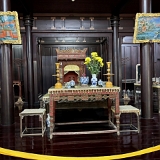
Tu Duc's temple complex and tomb, Hue
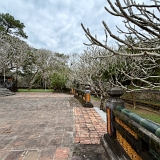
Plumeria trees at Tu Duc's temple complex and tomb, Hue
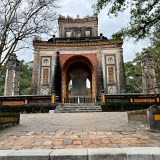
Tu Duc's temple complex and tomb, Hue
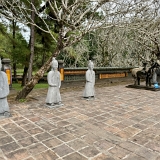
Mandarins and animals at Tu Duc's temple complex and tomb, Hue
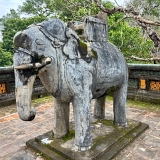
Elephant at Tu Duc's temple complex and tomb, Hue
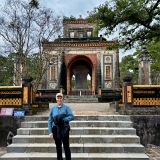
Tu Duc's temple complex and tomb, Hue
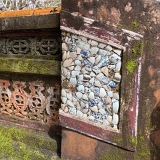
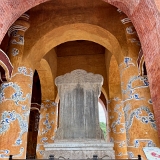
Tu Duc's temple complex and tomb, Hue.
Contents of Khiem cung ky include 5 main parts:
Part 1: The emperor's youth. The emperor had shown his intelligence and talent of poetic repartee since he was a child. Therefore, he soon received the love and much concern from his father more than his brothers, became the potential successor. However, he was in poor health and had smallpox when he reached the age of 20.
Part 2: The emperor's thinking on some important events of the country and the imperial court. Coming to the throne when he was still young and in poor health while the country confronted the invasion, the fact that he made the accusation against his brother was only for the sake of the country. The failure of Southern provinces of Vietnam was also from his fault, but it was not from his will since most of his bureaucrats had become cowardly and lazy after a long time in peace. These problems had made him depressed and thought of preparing for his death.
Part 3: The emperor gave reasons of selecting the tomb's location, the linkage to surrounding buildings in the relationship with his family members and feng-shui principles. For these reasons, this complex of architectures was named Khiem Cung (The Hall complex of Modesty) and it would be changed as Khiem Lang (The Tomb of Modesty) after his death. All architectures in this area were named with "Khiem" (Modesty) characters. People who participated in building this complex including officers, soldiers and workers were all well paid.
Part 4: His personal views and opinions about himself. He admitted that he was a shy and uncommunicative person but he gave strong respect for the morality and the providence. Therefore, he took his heartfelt attitude to cope with all matters and the virtue of modesty (Khiem) to accomplish his obligations.
Part 5: The epilogue. He insisted that the epitaph was to express his personal view, not to show the literary beauty. Had the readers not comprehended his thoughts, they would not have been annoyed.
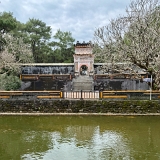
Tu Duc's temple complex and tomb, Hue
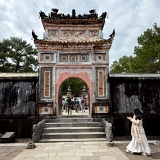
Tu Duc's temple complex and tomb, Hue
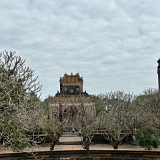
Plumeria trees at Tu Duc's temple complex and tomb, Hue
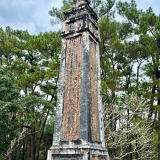
Tu Duc's temple complex and tomb, Hue
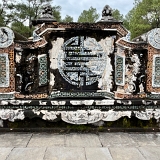
Tu Duc's temple complex and tomb, Hue
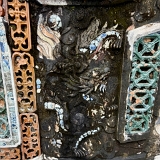
Tu Duc's temple complex and tomb, Hue
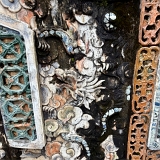
Tu Duc's temple complex and tomb, Hue
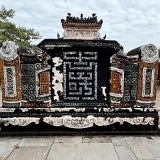
Tu Duc's temple complex and tomb, Hue
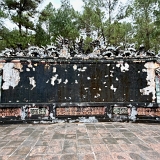
Tu Duc's temple complex and tomb, Hue
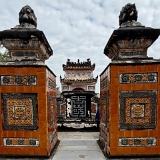
Tu Duc's temple complex and tomb, Hue
Tu Duc's temple complex and tomb, Hue
Tu Duc's temple complex and tomb, Hue
Tu Duc's temple complex and tomb, Hue
Tu Duc's temple complex and tomb, Hue
Tu Duc's temple complex and tomb, Hue
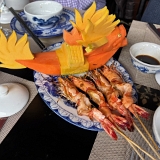
Lunch
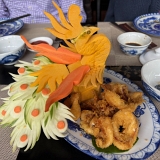
Lunch
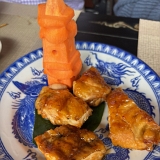
Lunch
